
 Cart is empty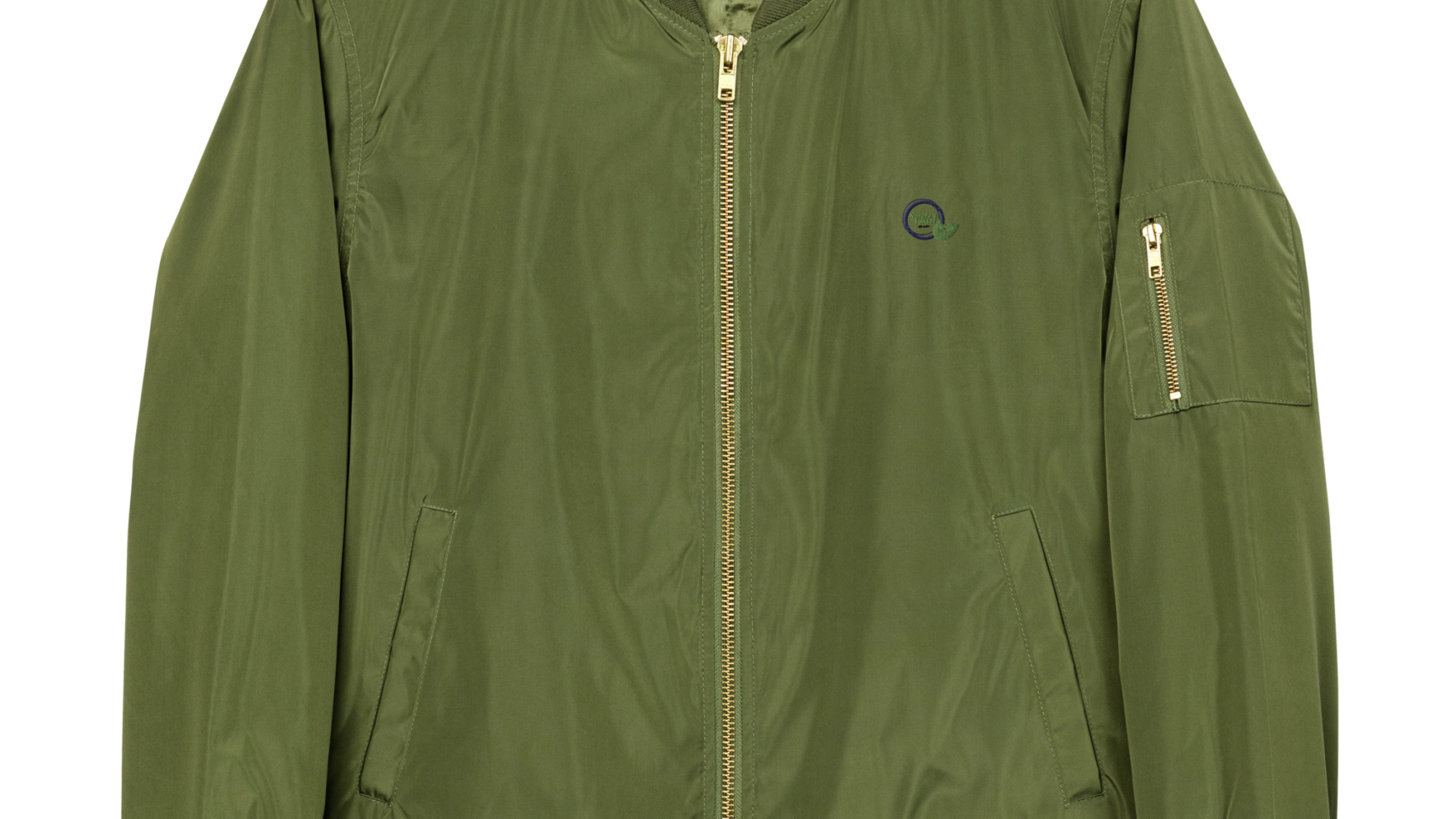
A classic silhouette, rebuilt from one hundred percent recycled polyester, arrives at the moment the industry is being asked to prove its claims.
Nature’s Sunset Feature
Nature’s Sunset Premium Recycled Bomber Jacket Brings a Streetwear Classic Into the Era of Accountable Fashion
A classic silhouette, rebuilt from one hundred percent recycled polyester, arrives at the moment the industry is being asked to prove its claims.
Few garments have earned a permanent place in the modern wardrobe the way the bomber jacket has. It began its life in military aviation, built to keep pilots warm and mobile in the cockpit, and over the decades it migrated from airfields to campuses, concert stages, city sidewalks, and the racks of nearly every clothing brand in the world. The silhouette has survived trend cycles that swallowed far louder ideas, and the reason is simple. A good bomber works with almost everything. It sits comfortably over a plain tee, layers neatly over a hoodie, and pulls together a casual outfit without asking for much in return.
What has changed is the conversation around how such a jacket should be made. At a moment when regulators, retailers, and shoppers are all demanding proof instead of promises, Nature’s Sunset has introduced a version of the classic that answers those expectations directly. The Premium Recycled Bomber Jacket is cut from one hundred percent recycled polyester, priced at $99.98, and designed in a relaxed unisex fit that welcomes nearly every body type and personal style. It is a familiar shape with a very current point of view.
An Industry Being Pushed Toward Honesty
To appreciate why this jacket arrives at the right time, it helps to understand the forces reshaping the global market for responsible products. The European Union has moved decisively against one of fashion’s most wasteful habits. Under its Ecodesign for Sustainable Products Regulation, large apparel and footwear companies can no longer destroy unsold goods, and they are expected to prioritize donating surplus inventory for at least eight weeks before any other route is considered. The rule targets the quiet reality of overproduction, where garments that never found a buyer were once shredded, burned, or buried without public attention. By closing that door, regulators are asking the industry to design, produce, and sell with far more discipline.
The same shift is visible in how materials are sourced. Textile recycling has graduated from small pilot programs into serious industrial infrastructure. Reju, one of the leading names in textile to textile polyester recycling, has opened its first research and development center in the United States with the goal of scaling industrial grade recycling of polyester. Fashion for Good has broadened its Fiber Club initiative, an effort aimed at making recycled yarns commercially workable for mainstream brands rather than only specialty labels. At the same time, plant based and laboratory grown materials, including mycelium leather, pineapple fibers, and algae based textiles, are moving out of the experimental corner and into the main apparel lines that brands are releasing in 2026, all in an attempt to reduce dependence on petroleum based virgin synthetics.
Beauty and personal care are living through a parallel reckoning. State legislatures have begun banning the intentional use of persistent chemical compounds commonly known as forever chemicals in cosmetics, with Illinois among the most recent to act and eight states now holding full prohibitions as of July 2026. Certification organizations that grant cruelty free status have narrowed their eligibility rules, so a brand can no longer rely on a simple statement about its finished product and must instead document every third party raw ingredient supplier. Even well known names in clean beauty have faced uncomfortable scrutiny after quietly reversing earlier vegan commitments. Regulators have also grown more willing to penalize companies that lean on vague terms such as eco friendly or natural when their supply chains cannot back those words up, and cosmetics oversight frameworks now give authorities real power to act.
Put together, these developments describe a single trend. The age of the unverified green label is ending, and brands are being asked to build genuine traceability into what they make. A recycled bomber jacket from a company that has already organized its collection around that principle is not a gimmick. It is where the whole industry is heading.
A Classic Silhouette, Rebuilt From Recycled Material
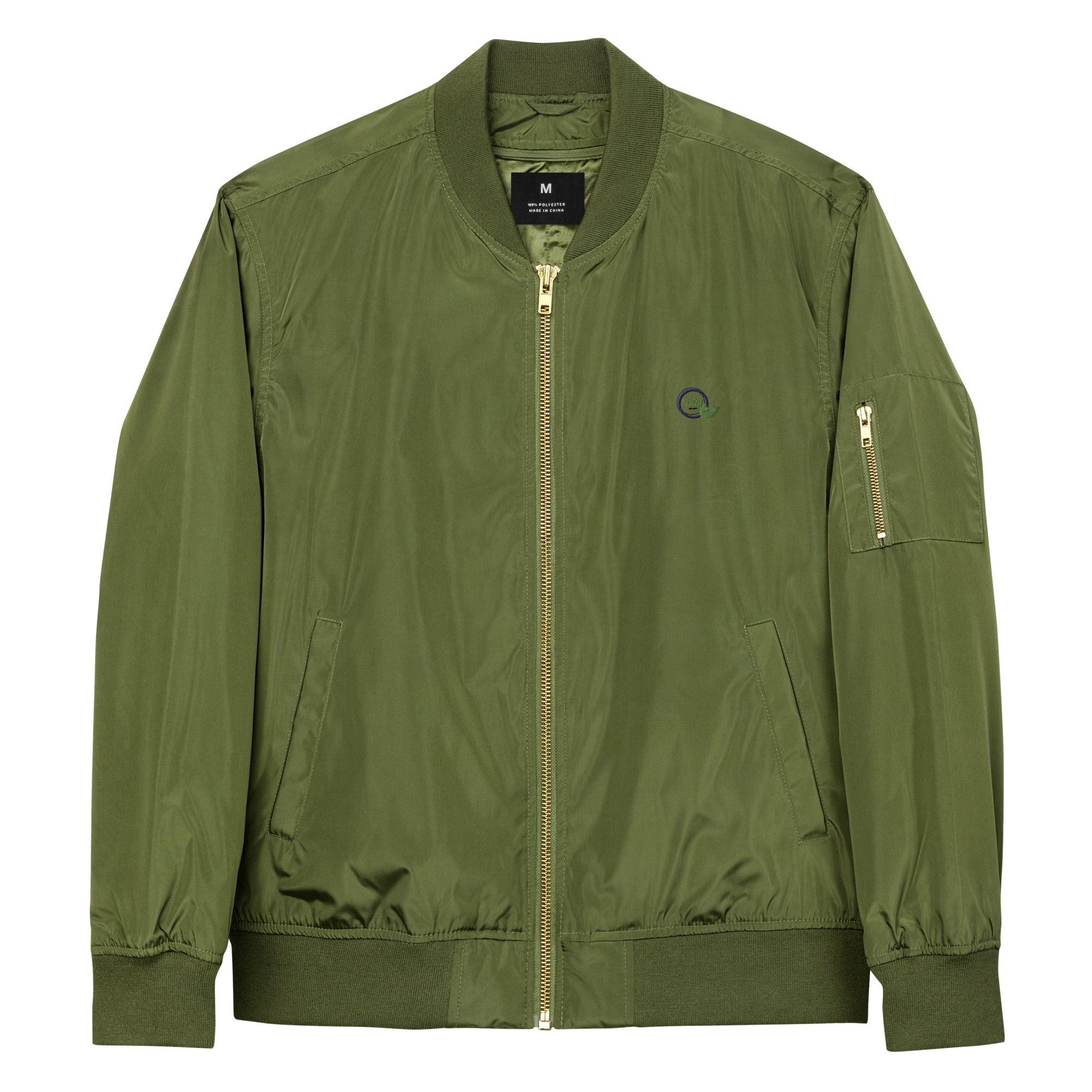
The foundation of the Premium Recycled Bomber Jacket is its fabric. The shell is made entirely of recycled polyester, which means the garment draws on material that already exists rather than newly extracted petroleum. Every jacket made this way keeps existing plastic in circulation as something useful and wearable, which is exactly the circular logic that regulators and recycling pioneers are trying to scale. Because the jacket contains no virgin synthetic content, the story it tells at the point of purchase is clear and complete, with no blended fine print to untangle.
The fabric weight comes in at five and a half ounces per square yard, or roughly one hundred fifty six grams per square meter. That places the jacket firmly in the lightweight to midweight range, which is precisely where a bomber belongs. It is substantial enough to feel like a real outer layer and to block a cool breeze, yet light enough to avoid the bulk that makes heavier jackets awkward to wear indoors or carry once the day warms up. For the shoulder seasons of early fall and spring, and for the chillier days that arrive in between, that balance is exactly what most people actually need from a jacket.
The relaxed fit completes the picture. Rather than clinging to the body, the jacket drapes with an easy, slightly roomy shape that layers comfortably over a hoodie or sweatshirt and still looks intentional over nothing more than a tee. Unisex sizing means the same jacket works across a wide range of bodies without the awkward compromises that sometimes come with garments labeled for one group and borrowed by another. A size guide on the product page helps shoppers choose the cut that suits them, and color and size can both be selected before purchase.
Details That Earn the Premium Label
A bomber jacket lives or dies by its details, and this one has been finished with the same care as its fabric. The rib knit banding at the collar, cuffs, and hem is the signature feature of the style. It gives the jacket its distinctive shape, holds warmth at the openings, and lets the body of the jacket blouse slightly for that unmistakable silhouette. Well made banding also keeps its elasticity through repeated wear, so the jacket still looks sharp long after the first season.
The zipper is a premium YKK, a component that rarely gets attention until it fails. A jacket can have beautiful fabric and a perfect pattern and still become frustrating if the closure sticks, splits, or snags, and a reliable zipper is one of the quiet markers of a garment built to last. For a piece meant to be worn often, that choice reflects a genuine commitment to durability, which is itself a form of sustainability. The most responsible jacket is the one that stays in rotation for years instead of being replaced after a single winter.
The utility pocket on the sleeve adds a modern, functional touch that nods to the jacket’s aviation roots. It offers a convenient place for small essentials such as keys, a card, or earbuds, and it gives the otherwise clean design a point of visual interest without cluttering the silhouette. Taken together, the banding, the zipper, and the sleeve pocket make the jacket feel considered from every angle, which is what separates a premium piece from a simple basic.
One Jacket Across Every Kind of Wardrobe
Versatility is the quiet superpower of the bomber, and this version leans into it. Worn open over a graphic tee and a pair of jeans, it delivers an easy weekend look. Zipped up over a knit and paired with tailored trousers, it reads as polished enough for a casual workplace or an evening out. It layers neatly over a hoodie when temperatures drop, and it slips off easily when they rise again. Its relaxed, unisex shape means it can be shared, borrowed, or gifted without worry about whether the cut will suit the recipient.
A bomber jacket does not need to reinvent itself to be relevant, and this one does not try.
That flexibility matters from a sustainability standpoint as well. A garment that adapts to many outfits, seasons, and occasions gets worn more often, and wear frequency is one of the most meaningful measures of a garment’s true environmental cost. Buying fewer, better pieces that actually earn their place in a closet is a more effective approach than chasing a constant stream of disposable trends, and a premium recycled bomber is a natural anchor for that kind of wardrobe.
Why Recycled Polyester Deserves a Serious Look
Polyester has long carried a complicated reputation, and it is worth addressing directly. Conventional polyester is produced from virgin petroleum, which carries a significant environmental burden before a single stitch is sewn. Recycled polyester changes that starting point. By turning existing plastic into new fiber, it reduces the demand for fresh fossil resources and gives already manufactured material a second, longer life.
As recycling infrastructure expands, that advantage only grows. The opening of dedicated research and development facilities and the expansion of industry collaborations focused on recycled yarn are early signs of a system that is steadily becoming more capable of closing the loop. Emerging bio fabricated alternatives will likely play a larger role in the years ahead, but recycled polyester remains the most practical, scalable, and affordable option available to everyday shoppers right now. Choosing it today means supporting the same demand signals that give the next generation of recycling and material innovation a reason to keep advancing.
A Collection Built on One Consistent Standard
The Premium Recycled Bomber Jacket is not a lone sustainable item surrounded by conventional products. It belongs to the broader recycled clothing collection from Nature’s Sunset, a lineup that includes hoodies, sweatshirts, crop tops, athletic wear, and swimwear built around the same principle of material integrity. That consistency is what gives the jacket credibility. A single recycled product can be dismissed as a marketing exercise, but an entire collection organized around recycled and organic materials signals a real operating philosophy.
The same standard extends beyond apparel. Nature’s Sunset applies a comparable level of care to its beauty, home, and wellness categories, which positions the brand well for a regulatory environment that increasingly rewards transparency across every product line. As supply chain documentation requirements tighten, as certification bodies demand more rigorous tracking, and as authorities become less patient with unsupported buzzwords, brands that already operate with this level of openness will find themselves ahead of the curve rather than scrambling to catch up.
What This Jacket Means for the Way People Shop
For the individual shopper, all of this regulatory and industry change translates into a simple shift in expectations. It is now reasonable to ask what a garment is made from, where its materials came from, and whether the claims on its label can be trusted. The Premium Recycled Bomber Jacket answers those questions plainly. It is made of recycled polyester. It is built with durable, high quality components. It is designed to be worn across seasons and styles, and it is priced at a level that makes responsible choices accessible rather than aspirational.
There is also something refreshing about the honesty of a classic. A bomber jacket does not need to reinvent itself to be relevant, and this one does not try. It takes a shape that has proven its worth for generations, strips away the old dependence on virgin materials, and delivers it with the kind of finishing details that signal real quality. In a market full of loud sustainability claims, a well made jacket that simply does the work quietly is a welcome change.
The Next Chapter for Responsible Outerwear
The fashion industry is entering a period where the brands that thrive will be those that treat transparency, durability, and material responsibility as starting points rather than afterthoughts. Nature’s Sunset has been building toward that moment, and the Premium Recycled Bomber Jacket is one of its clearest expressions. It honors a classic silhouette, respects the planet’s limits, and gives wearers a piece they can reach for again and again without hesitation.
Anyone looking to refresh their outerwear with something that reflects where the industry is genuinely heading will find the Premium Recycled Bomber Jacket well worth a close look, along with the rest of the recycled clothing collection built on the same foundation. As the rules around sustainability claims continue to tighten and the expectations of shoppers continue to rise, a jacket built honestly from recycled material is no longer a niche choice. It is simply the smarter way to wear a classic.